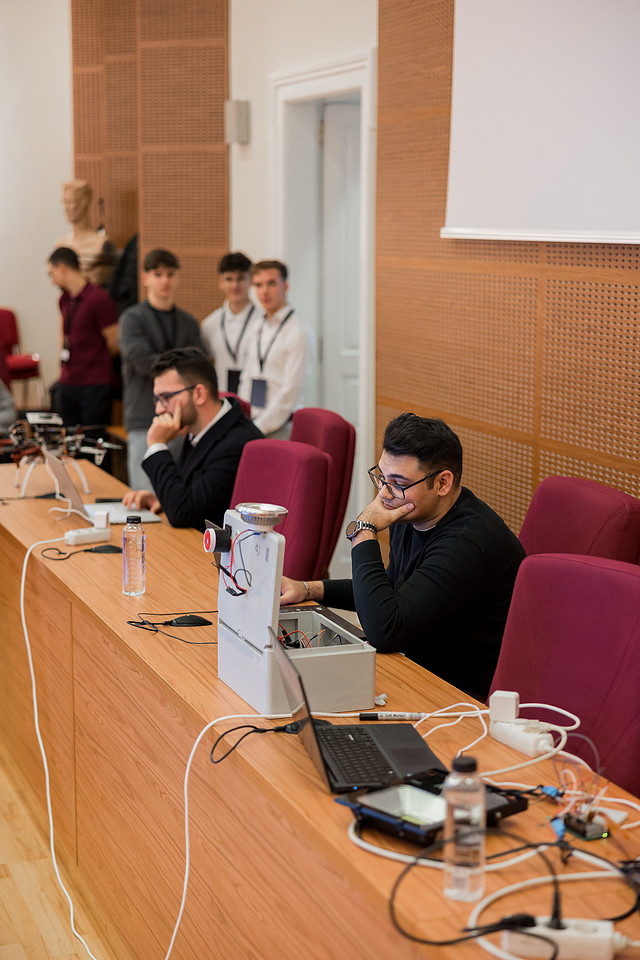
On December 18 we ran the first Hasna Global × UTCN event at the Technical University of Cluj-Napoca. A day of talks, a short build sprint, and conversations that ran late into the evening with students, faculty, and a few people who drove in from other cities because a friend had tagged them on LinkedIn.
Here is an honest recap. What we ran, what worked, what did not, and what we are going to do differently next time.
The day opened in the main amphitheater with a short keynote — what Hasna is, why we build the way we do, and why we were at UTCN specifically. The room was fuller than we expected. We had planned for somewhere in the range of what a typical faculty event draws. More students showed up than we had chairs for, which was a pleasant problem to solve in the first five minutes and a signal we underestimated the interest. Lesson noted for the next one.
After the keynote we split into two tracks. The first was a workshop on building agents with the open-source infrastructure we publish — connectors, memory, task management, browser automation. Students who had never touched any of it watched one of our engineers go from empty editor to a working agent that scraped a website and summarized the results, in about twenty-five minutes. The workshop was deliberately slow; we wanted people leaving with the ability to reproduce it themselves, not dazzled by a speedrun.
The second track was a Q&A on careers in AI, which turned out to be the session students wanted most. The questions were sharp. Not "how do I get a job at a big company" — those questions never came up — but "what specifically should I learn in my last year to be useful to a small AI team." We answered honestly. Know how to ship. Know how to read someone else's code fast. Pick a hard open-source problem and do real work on it publicly. That is the portfolio.
The build sprint in the afternoon was four hours, not forty-eight. We were clear in advance that this was a taster, not a full hackathon — a proper multi-day format is in the plan for a later event. Teams of two to four picked from a short list of problems we had pre-written (each one a real thing we have had to build at Hasna, just scoped down to fit the window). The winning project was an agent that took a meeting transcript and produced a clean action-items list routed to the right team member — a problem that is harder than it sounds, and the winning team got further than we expected. The runner-up built an agent that tracks incoming press mentions and drafts response emails for review. Both are live on the students' GitHub, linked from the event page.
On the logistics side. Food held up. Wifi did not, for about thirty minutes around 14:00, which is the single thing we will fix most aggressively next time. The registration process was smoother than we had feared — the faculty handled that end, and they did it well. Badges and signage we put together ourselves and they were fine; a slightly more polished setup would cost us almost nothing and make the day feel more professional.
Attendance numbers, since people will ask. Around a hundred and forty students in the morning session, about eighty who stayed through the build sprint in the afternoon. This is the first time we have run anything of this shape, so we do not have a comparison to offer. The faculty told us afterward that their typical event at this scale draws half as many, which is kind of them to say and probably a little generous.
One thing we got right. Keeping the format small and specific. We resisted the temptation to make this a two-day thing with sponsors and after-parties and panel discussions. One day, one venue, one clear purpose: let students build something real with tools they can use tomorrow. The clarity of the framing made everything else easier to plan, and we think it is why turnout was strong.
One thing we got wrong. Not enough mentors on the floor during the build sprint. Four of us were there, and even at the modest turnout we had, we were running between tables and not able to give every team the depth of feedback we wanted to. Next time we plan to bring at least eight mentors — some from our team, some alumni we trust, maybe some invited engineers from partner companies.
The research grant side of the partnership is also moving. The PhD student we are funding started work in November on memory consolidation in long-running agents, which is one of the harder open problems in our own product. First preliminary results are expected around the end of Q1 2025, and we will publish whatever comes out of it — good, bad, or ambiguous.
What happens next. We are taking a month to let the dust settle, debrief with the faculty, and decide what a second event should look like. The default direction is: larger build sprint (full weekend), more mentors, keep everything else the same. We will announce specifics when we have them rather than pre-commit to anything now.
Thank you. To the UTCN faculty — particularly the two people who did most of the coordination work, you know who you are — who made this possible. To the students who showed up on a Wednesday in December and built things. To the two teams that stayed until 22:30 even though the event officially ended at 19:00, because they wanted to finish their projects. To Flaviu, who took photos all day. If any of this sounds like the kind of event your university or company would want to support, email [email protected].
Photos are on the press page. The winning team's project repo is linked there too.