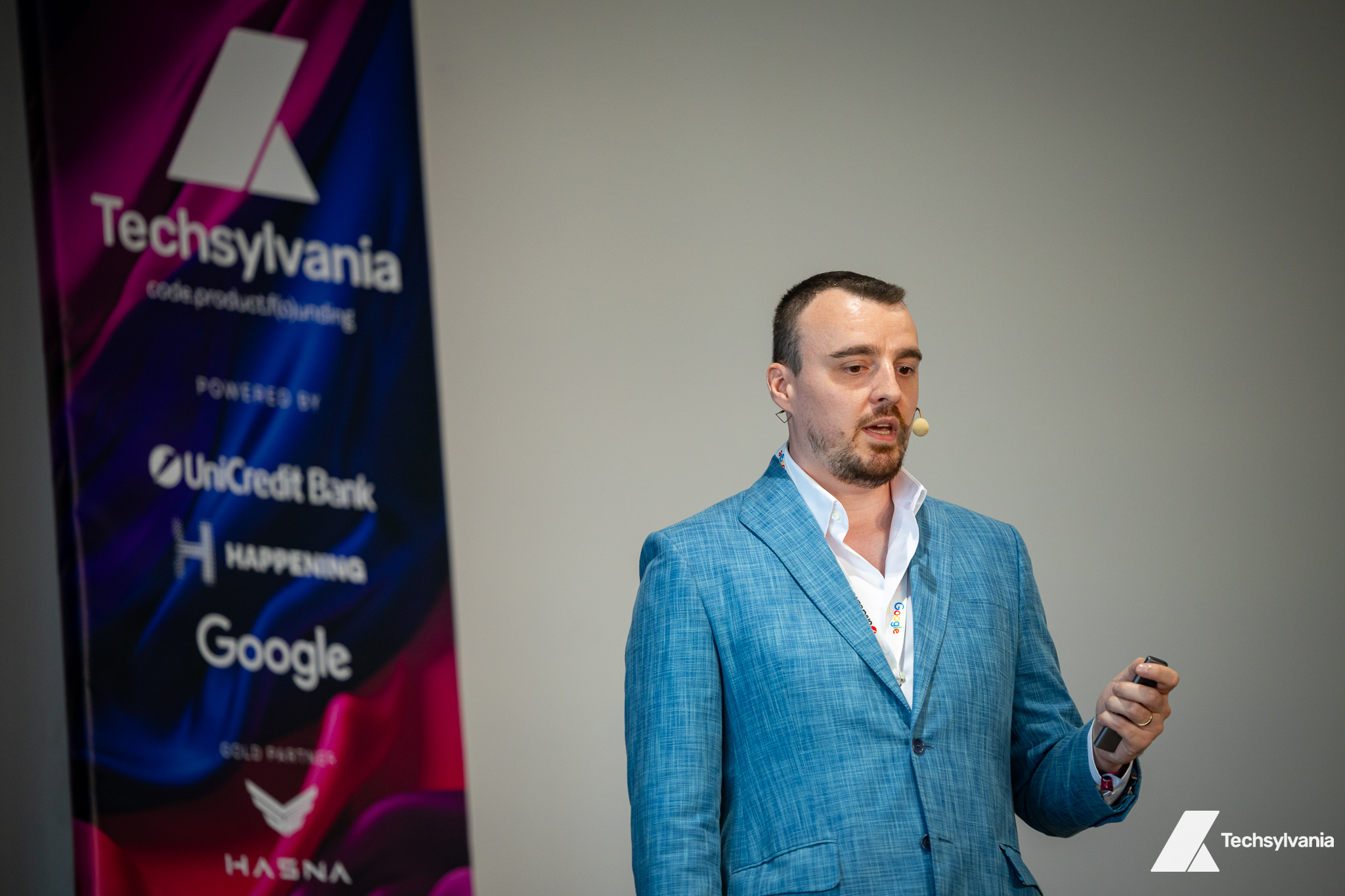
We went to Techsylvania 2025 mostly to give the Impact Stage talk on agent-driven augmentation. The talk went well, and we have written about it separately. What ended up mattering more, in retrospect, was the three long conversations we had on the margins of the event — over coffee, in hallways, at the unofficial dinners. This is a short post about what those conversations changed.
First conversation. A founder of a mid-size European SaaS company, two beers in, told us in detail about the agent project his team had tried to build and abandoned. The technical architecture had been reasonable. The failure was not technical. They had assumed that their customers would immediately want an agent that automated their workflows, and most of their customers had not. The customers wanted the agent to help, to augment, to suggest — but not to take action autonomously. Every time the agent crossed the threshold from suggesting to doing, customer satisfaction dropped sharply.
That conversation reframed something we had been thinking about wrong. We had been designing our own agent UX around the autonomy axis — how much can the agent do without a human in the loop. What the founder's experience suggested is that the more important axis is the reversibility axis — how easily can a human undo what the agent did. An agent that does ten things autonomously, all of them trivially reversible, feels much safer to users than an agent that does one thing autonomously where the consequence is non-reversible. We are currently redesigning some of our product UI around this framing, and we think it is a better framing.
Second conversation. Two engineers from a robotics startup, over lunch on day two. They had been through the full cycle of hardware-first robotics development — invest heavily in mechanical design, spend two years iterating on the robot body, only find out in year three that the software challenges were the real bottleneck. Their lesson, painfully learned, was that the hardware was the easy part. "Everything we spent a year and a million dollars on, we could have bought off the shelf." What they had actually needed was a much stronger software stack, which they were now rebuilding with a smaller team and a tighter focus.
This was directly relevant to Emebo, the early-stage robotics research we had just announced. The conversation gave us external confirmation for a decision we had already made but were not sure about: we are using off-the-shelf platforms, not building our own hardware, at least for the foreseeable future. Hearing someone who spent years going the other way tell us we should stay software-first made us more confident. The conversation also surfaced a specific platform we had not been seriously considering, which we have since started evaluating.
Third conversation. A venture investor who has been in the agent space for about five years, at a much less crowded dinner on the last night. She made a point that has stuck with us, which is that the agent companies she has seen struggle most are the ones that built a horizontal platform without a specific first use case. The successful ones had a sharp vertical beachhead — legal, finance, specific back-office functions — and expanded from there. She was not telling us to pivot; we already have a specific beachhead in Alumia's core use cases. She was warning us not to spread thin as we grow. "The temptation when the platform works is to apply it to everything at once. The teams that do that fall apart."
We took notes. We are now being more disciplined about which adjacent use cases we take on. There are some natural expansions from our current customer base that we were going to pursue in parallel; we are now pursuing them sequentially, with clear success criteria for each before moving to the next. This is a less exciting way to grow, but we think it is the right one.
A few smaller conversations that are worth noting. Someone from an established research lab explained their approach to benchmarking agent performance, which was more rigorous than ours and has since informed our internal evaluation process. A designer walked us through a new pattern for explaining agent decisions to end users, which we think we are going to adopt. An ops person at a medium-size company described the three things they wish every tool vendor would do differently, all of which were reasonable, and two of which we are now doing.
The general lesson from all of this, which we keep relearning, is that the marginal value of talking to people who actually do the work — customers, builders, investors with real portfolio experience — is much higher than we give it credit for in the moment. When we sit down to plan our quarter, we plan around what we think is important. Three days at a conference with good conversations consistently adjusts that plan in meaningful ways. We came home with a shorter roadmap than the one we arrived with, which is almost always the right direction for a small team.
If you were at Techsylvania and we had one of those conversations, thank you. Several of you will see the results in shipped product over the next few quarters. If you were at Techsylvania and we did not get a chance to talk, we would still like to. The email at the top of the contact page reaches a human.
We will be at a few more events this year — ones we care about. We will write up anything substantive we learn.