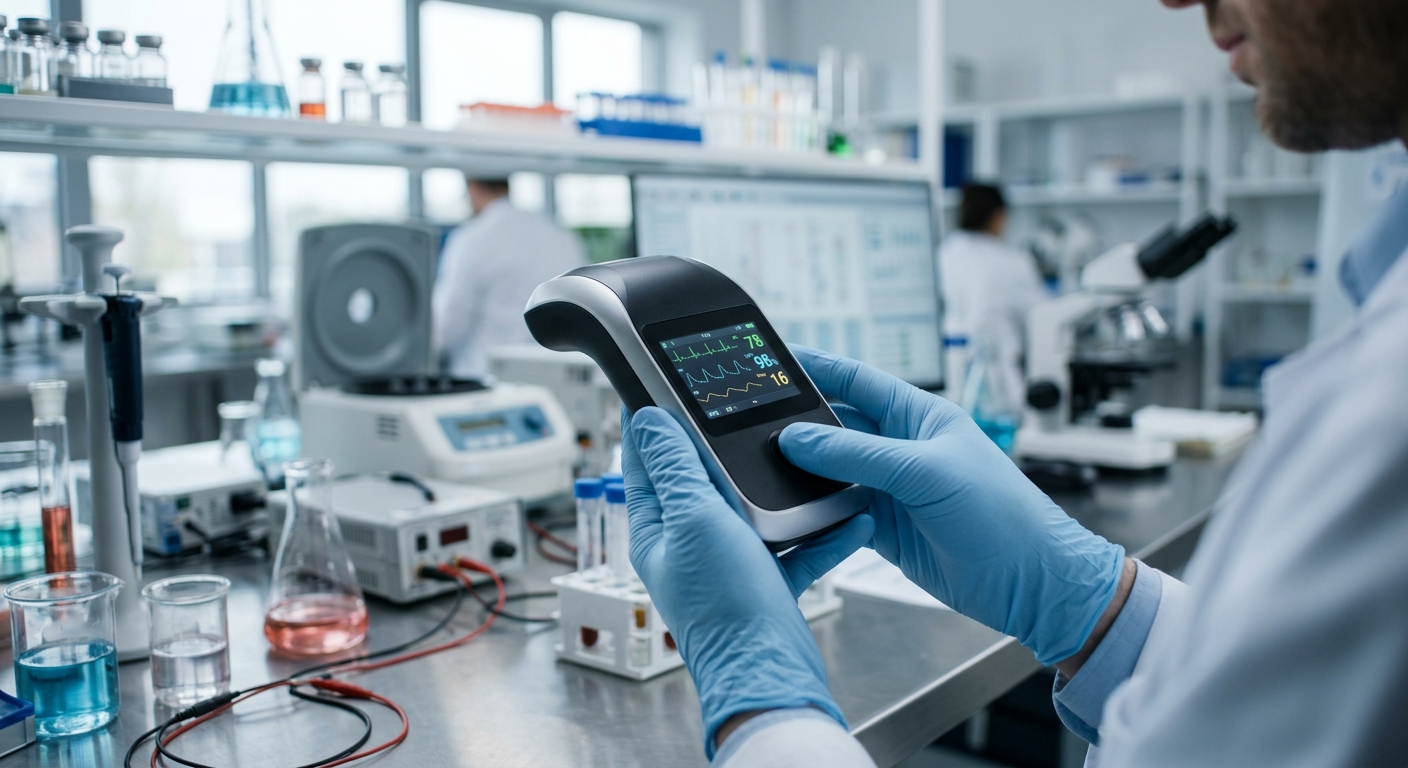
We are starting research on Pawk, a project aimed at making basic health diagnostics possible at home. Like Emebo, this is an early-stage research effort. There is no product to buy. There is no timeline we are comfortable committing to. This post is our public record of what we are attempting and why.
The problem, as we see it. For most people, getting answers to routine health questions — is this symptom serious, should I see a doctor, how are my vitals trending — is much harder than it needs to be. In many countries, you wait weeks for an appointment. You go in, answer three questions, get three minutes of attention, and leave with a referral or a prescription. The actual information-gathering part of the visit — vitals, basic history, symptom description — could have happened before you arrived, or at home, with a well-designed combination of hardware and software. A lot of it already does, but in fragmented ways that do not connect into anything coherent.
We are interested in whether a unified, carefully-designed home diagnostic tool can move the line. Not replace doctors. Not diagnose complex conditions. Handle the 80 percent of routine questions that do not actually need a clinical visit, and surface the 20 percent that do, quickly.
Scope, realistically. We are not building an MRI machine for the kitchen. The initial scope is much narrower and deliberately so. Things like: reliable vital signs (heart rate, blood pressure, oxygen, temperature) with a single device. Simple blood markers that have good consumer-grade sensing available. Symptom checkers that are grounded in actual clinical decision rules rather than LLM hallucination. A health history tracker that captures your data longitudinally so changes over time are visible to you and, when you want, to your doctor.
What makes this hard. Three things, roughly in order of difficulty. Regulation. Health devices in every jurisdiction are heavily regulated, and correctly so. We are planning for this from day one, which means some of the early work is about understanding exactly what would be required to actually ship any of this to consumers. Clinical validity. Anything we ship has to work, not just appear to work. That means partnerships with clinicians from very early stages, not bolted on at the end. Safety of interpretation. The hardest part of any consumer health product is the UX of presenting results. It is trivially easy to scare a user with a borderline number that would not concern a doctor. It is also trivially easy to falsely reassure someone whose result is actually a flag.
What we bring. Again, nobody on our team has an MD. What we bring is the same thing we bring to other projects: software that can plan, execute, and reason across complex workflows. A modern health diagnostic tool is a hardware problem wrapped in a very hard software problem. The hardware pieces are increasingly commoditized. The software piece — integrating the signals, running the clinical logic, explaining the results clearly, knowing when to escalate — is where we think we can contribute. We will partner with people who have the hardware and clinical expertise we do not.
What we will publish. Research notes on the clinical integration approach. Open-source code for the parts of the software stack that do not need to be proprietary (which is most of it — the value is in the integration, not any single component). Honest assessments of what we tried and whether it worked.
What we will not do. Make specific medical claims before we can back them with clinical validation. Market "early access" to anything medically consequential. Compete with doctors. The goal of Pawk, if it ever ships, is to make the time you spend with a doctor more productive — because you arrive with actual data instead of vague recollections — not to replace doctors.
Timeline. Same answer as Emebo: we are not giving one. A year from now we may have a working prototype, or we may have concluded the regulatory path is harder than we expected and pivoted to something more focused. Either outcome is fine. We will post updates honestly.
If you want to help. If you are a clinician who is frustrated with the state of consumer health tech and has views about what would actually be useful, email [email protected]. If you are a hardware engineer working on sensing or diagnostic devices, same email. If you just want to follow along, subscribe on the research page.
We are being cautious with announcements in the health space because the default behavior in this industry is overclaiming, and overclaiming in health has real consequences. Somebody postpones a doctor visit because an app told them it was nothing. Somebody spends money on a device that does not work. We would rather be slow and accurate than fast and wrong.
That is where we are. Research phase, small team on the problem, no product to buy. We will update this space with substantive news when there is substantive news to share.